


Turning an Empty Wall into a Focal Point – Designing a Minimalist Interior
When planning an interior, most attention is typically given to furniture, lighting and textiles. Walls often remain in the background, acting as a neutral backdrop for everything else.
Yet, a single well-designed wall can completely transform the character of a space. An empty wall does not have to remain just a surface — when approached thoughtfully, it can become the visual centrepiece.
In minimalist and Nordic interiors, the goal is not to fill every surface with decoration. A carefully considered solution brings depth, balance and character without overwhelming the space.
Why Does an Empty Wall Sometimes Feel Incomplete?
Many people feel that a completely blank wall leaves a room unfinished. This usually happens when there is a lack of visual balance.
A large, smooth surface can appear overly neutral, especially when the rest of the interior is minimal. The space may feel slightly unfinished or lacking structure.
This does not mean every wall needs to be filled with multiple decorative elements. Often, a single strong visual feature is enough to create balance.
Such an element might be:
| A large-scale artwork | A decorative wall panel |
| A contrasting accent colour | A textured surface or wall tile |
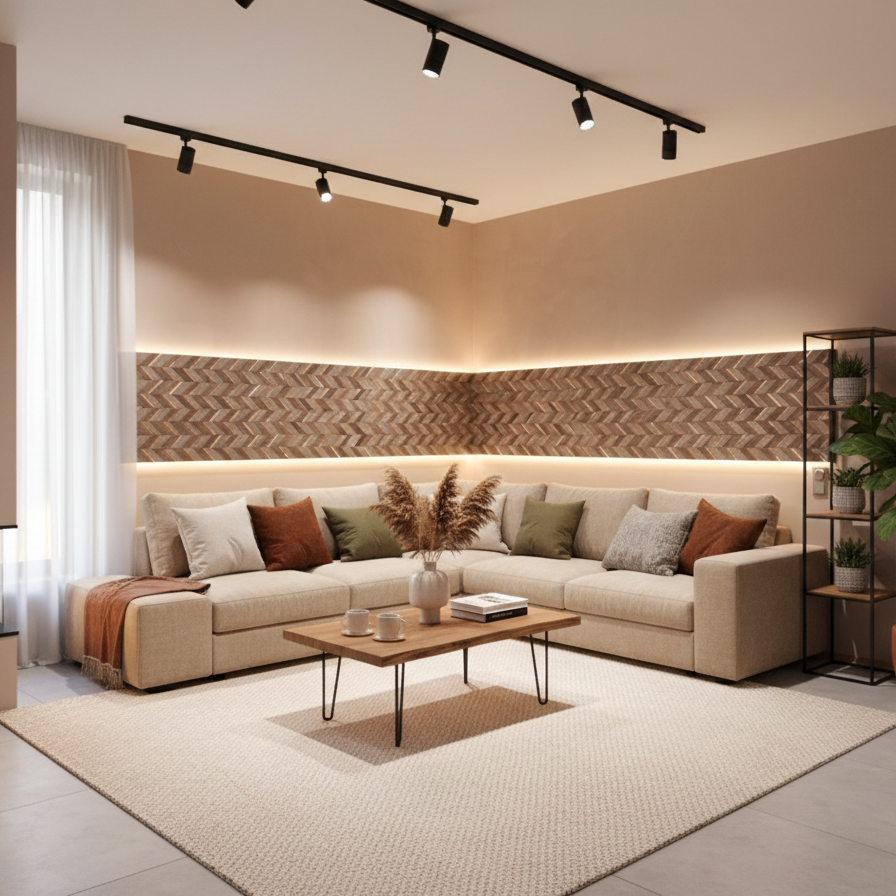
The key is that the chosen solution aligns with the overall atmosphere of the space.
The Accent Wall as a Focal Point
One of the most effective interior design techniques is the use of an accent wall. The idea is simple: one wall is designed differently to draw attention and create a focal point.
When the eye naturally settles on a defined area, the entire space feels more intentional and harmonious.
An accent wall can be:
- painted in a different tone
- finished with decorative panels
- styled with wall art
- created using textured materials.
Minimalism – Less, but More Intentional
Scandinavian design avoids overloading a space with details. Too many elements can make an interior feel restless and visually heavy.
In a minimalist setting, each element has a purpose. Instead of multiple small details, one or two stronger features are selected.
An empty wall can also be a deliberate choice. If the space already contains a variety of furniture or colours, a calm surface helps maintain balance.
On the other hand, if the interior is understated and neutral, an accent wall can introduce depth and subtle movement.
Texture – A Subtle Way to Bring a Wall to Life
One of the most effective ways to enhance an empty wall is through texture. Decorative wall panels offer a refined way to achieve this. Geometric patterns, relief surfaces or mosaic structures create visual interest without overwhelming the space.
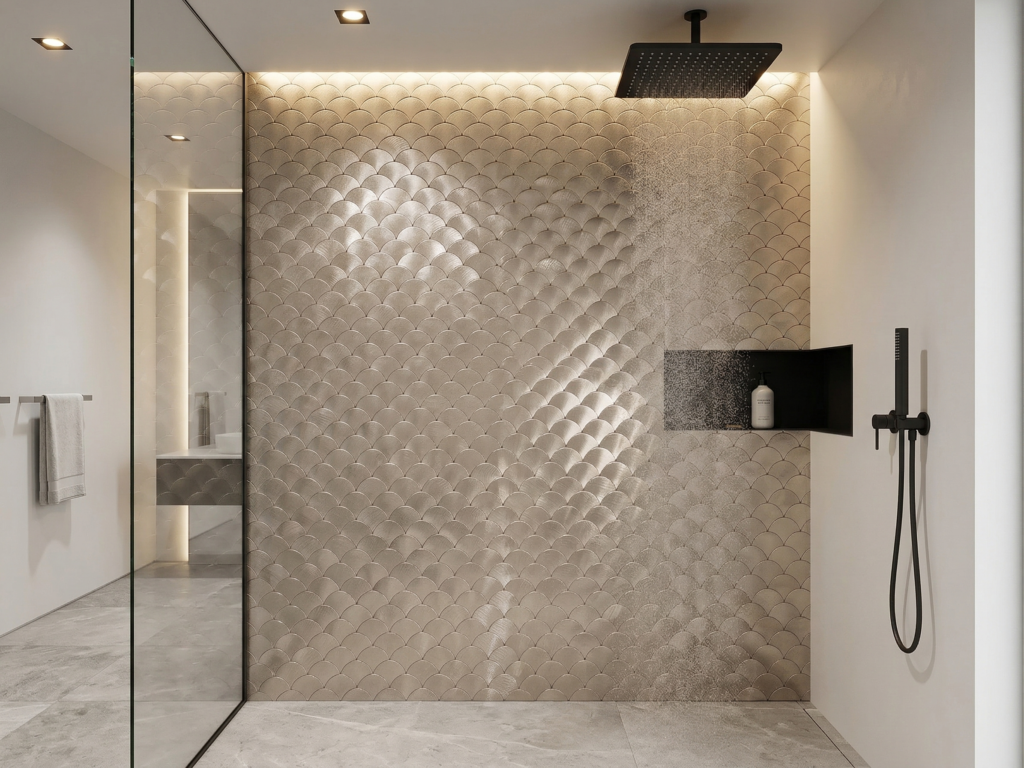
Decorative Wall Panels as an Accent
For interiors that aim to remain minimal yet expressive, decorative wall panels provide a balanced solution.
Nordih Mosaic Wall Panels introduce a geometric structure that interacts with light, subtly enhancing the spatial experience.
A panelled wall fits naturally into interiors that favour simplicity, high-quality materials and a calm visual language.
Where Accent Walls Work Best
While an accent wall can be introduced in almost any room, some placements are particularly effective.
Considering Light When Designing a Wall
Light plays a significant role in how a wall is perceived.
Natural daylight changes the appearance of colour and texture throughout the day, while artificial lighting highlights patterns and relief in the evening.
When designing an accent wall, it is worth considering how it will be illuminated. Directional or spot lighting can enhance textured surfaces and emphasise depth.
It is the interaction between light and material that gives a space its layered quality.
Why Textured Walls Are Popular in Hotels and Restaurants
In contemporary hotels and restaurants, walls are rarely left as simple painted surfaces.
Layered textures create interiors that feel more refined, considered and premium, while also offering better durability under frequent use.
Nordih Mosaic wall panels stand out in such environments due to:
- · a distinct visual presence
- · durability
- · easy maintenance
- · the ability to define a space’s identity
The Nordih Approach to Wall Design
The Nordih collection is built on the idea that walls can play a central role in interior design.
Nordih Mosaic Wall Panels combine minimalist aesthetics with durable materials, making them suitable for a wide range of spaces.
The geometric mosaic structure introduces a calm visual rhythm and supports Scandinavian design principles.
The result is not purely decorative — it is a balance between function and timeless design.
A minimalist approach to interior design results in a calm, well-thought-out, and everlasting design.
Discover the Nordih Collection
If you are planning a calm, Nordic-style interior, the right wall panels can effortlessly transform an empty wall into a striking focal point.
Discover Nordih wall panels
Explore the full collection
Find inspiration